The Post-Authenticity Era: Why Audiences Distrust UGC
The Post-Authenticity Era: Why Audiences Distrust UGC
Audiences are getting better at spotting fake UGC — and they're tuning it out. What the post-authenticity era means for brands and how to create UGC that still earns trust.
Published:

Read Time:

5 min

Written by:
Fawwaz
Trend Research and Copywriter
UGC isn't the cheat code anymore
the feed feels like a 24/7 infomercial. consumers are fatigued, and trust is gone.
UGC isn't the cheat code anymore
the feed feels like a 24/7 infomercial. consumers are fatigued, and trust is gone.
UGC isn't the cheat code anymore
the feed feels like a 24/7 infomercial. consumers are fatigued, and trust is gone.
We have officially entered the Post-Authenticity Era.
If your brand is suddenly seeing a spike in Cost Per Acquisition (CPA) and a drop in average view duration, the algorithm isn't broken, not your audience's trust.
Here is the data behind the creator economy trust crisis, how the modern consumer views the "Sponsored" label, and the exact hacksheet brands must use to win back conversions in 2026.
📉 Why the Trust is Tanking
According to recent eMarketer analyses, platforms like TikTok are facing a severe crisis of confidence, particularly among Gen Z users. The primary culprit? A massive surge in sponsored content.
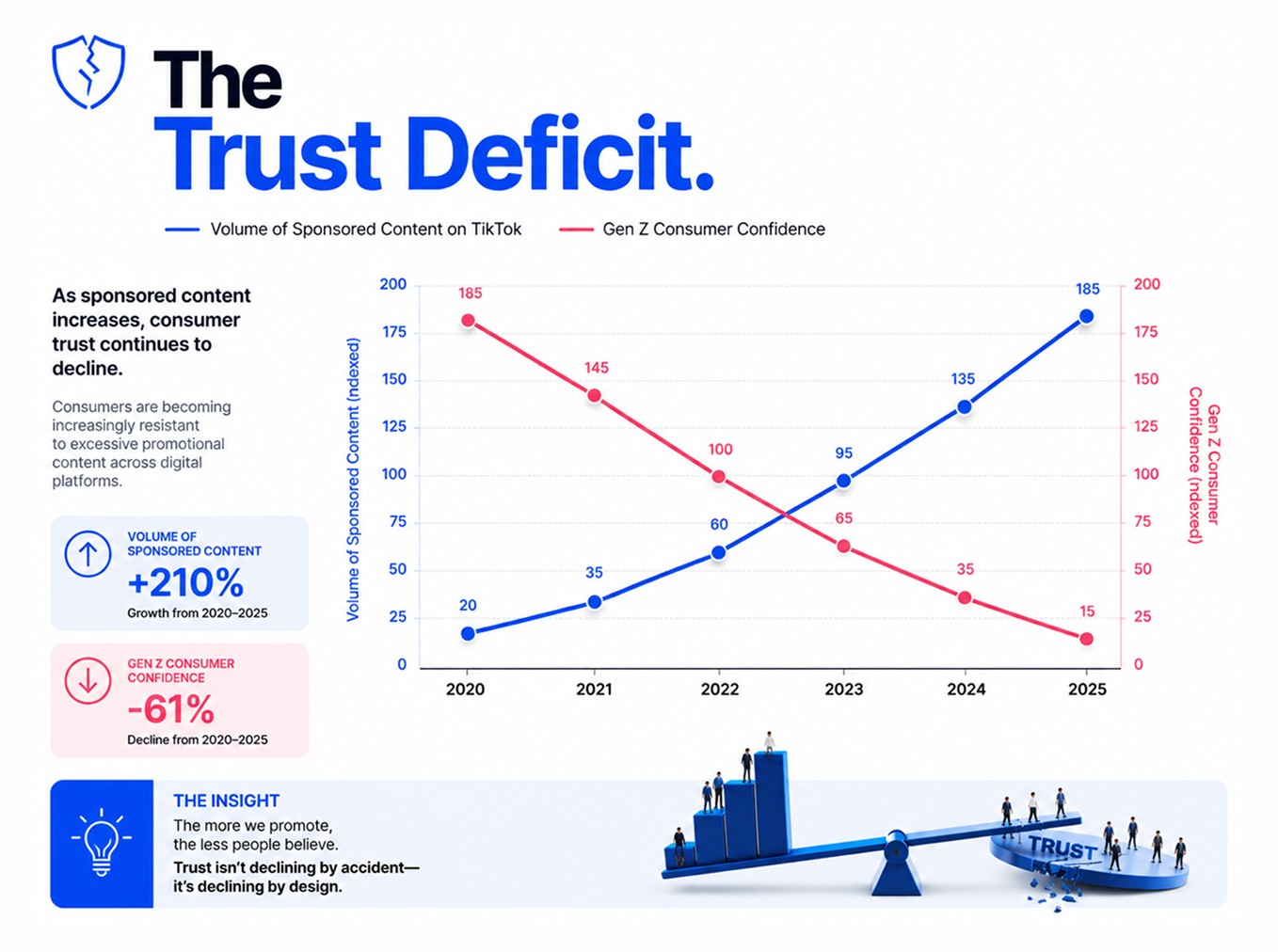
When a user scrolls past five consecutive videos of creators hyping up a mediocre product with the exact same unnatural enthusiasm, skepticism skyrockets. The organic, community-driven nature of these platforms is being suffocated by high-volume, low-effort ads. Consumers are swiping past anything that remotely smells like a sales pitch in under two seconds.
🏷️ The "Sponsored" Label Paradox: A Brand's Truth Test
Many brands assume that the mandatory "Sponsored" or "Eligible for Commission" label is a death sentence for video retention. They instruct creators to hide the label or bury it in the hashtags.
This is a fatal mistake.
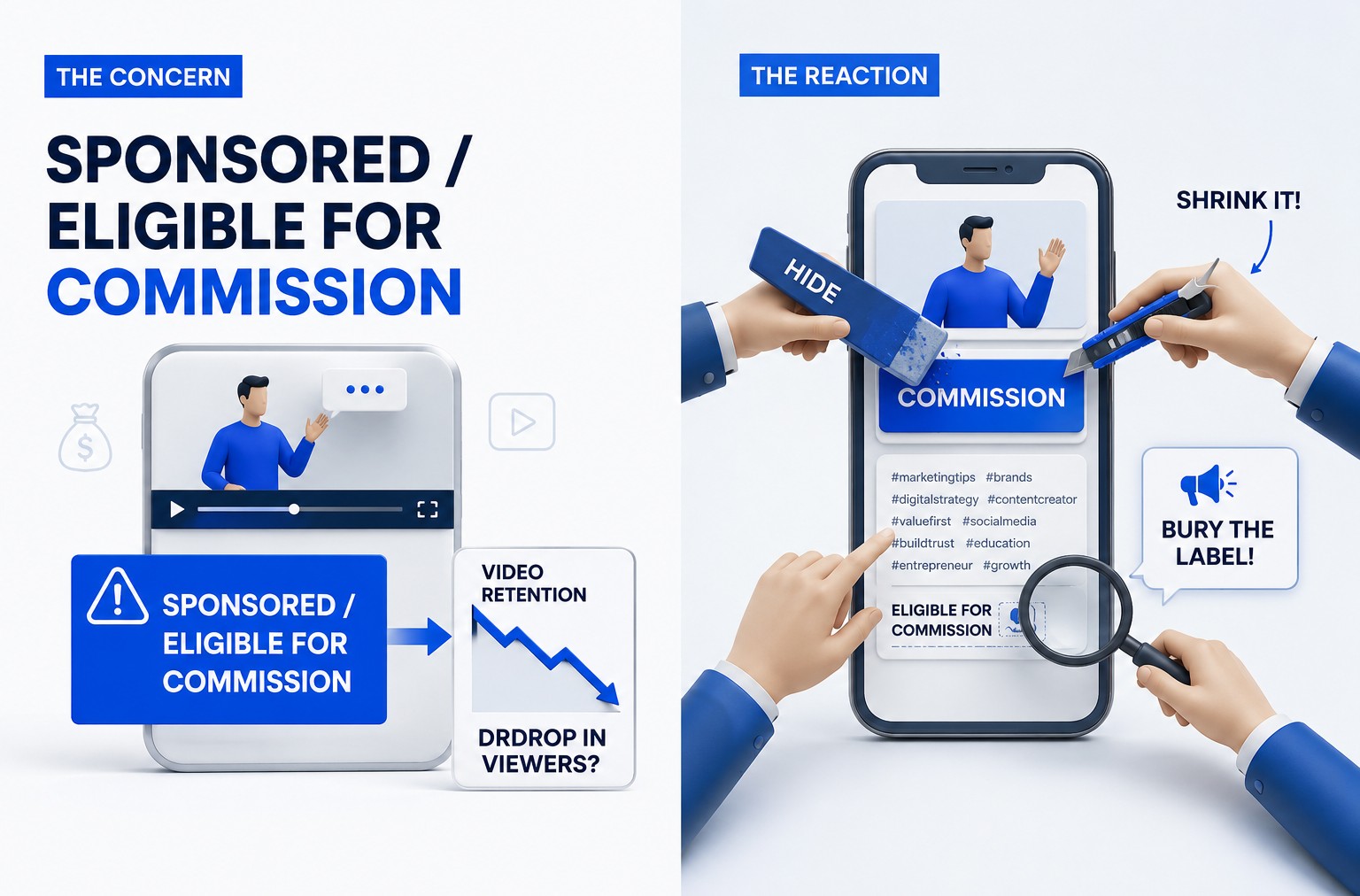
Gen Z doesn't hate sponsorships, but they hate deception. Audiences are far more accepting of clearly labeled sponsored content when it feels honest, valuable, and authentic.
The real problem starts when creators hide sponsorships while pushing products too aggressively. In today's social media landscape, transparency is the baseline for trust.
🎯 How to Win UGC in a Low-Trust Market
To scale revenue in a low-trust environment, brands must stop buying "hype" and start engineering credibility. Here is the three-step playbook to create UGC that actually converts.
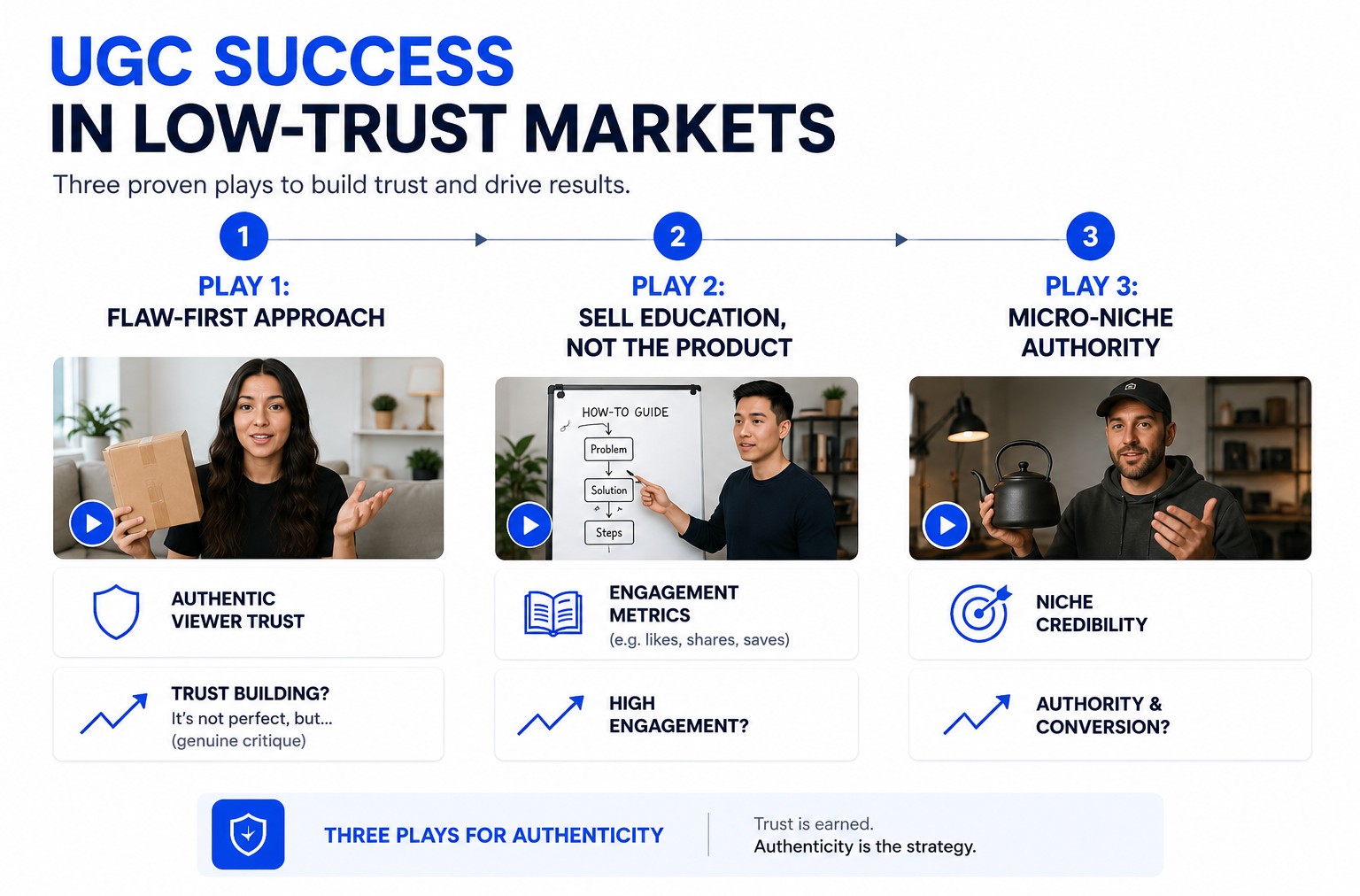
Play 1: The "Flaw-First" Approach
Perfection is the enemy of trust. If a creator claims a product is 100% flawless and changed their life overnight, the viewer instantly knows it is a paid script.
The Strategy: Instruct the creator to point out a minor, relatable flaw or limitation before selling the main benefit.
Example: "This new productivity app is amazing, but honestly, the setup process took me about 20 minutes to figure out. However, once I got it running, it saved me three hours this week."
Why it Works: Admitting a small flaw proves the creator isn't a mindless mouthpiece for the brand. It immediately validates their authenticity, making the subsequent praise completely believable.
Play 2: Sell the Education, Not the Product
If audiences are tired of being pitched to, stop pitching.
The Strategy: Structure your UGC as a high-value tutorial or a "Did You Know?" educational segment. The first 80% of the video should solve a problem for the viewer for free.
Example: A creator making a video on "3 hidden iPhone settings draining your battery," and then introducing your portable charger in the last 3 seconds as the ultimate backup.
Why it Works: You are initiating an exchange. You give the viewer immense educational value, and in return, they drop their ad-blocker and listen to your subtle product integration.
Too Commercial
Experience Sharing
Play 3: Micro-Niche Authority
Brands often chase creators with a million followers to maximize reach. In a low-trust era, this backfires. Mega-influencers are viewed as walking billboards.
The Strategy: Partner with micro-creators (5k–50k followers) who possess deep authority in a highly specific niche.
Why it Works: A running shoe review from a creator who only posts about marathon training holds infinitely more weight than a review from a general lifestyle vlogger. Micro-creators have intimate, established trust with their communities.
🚀 Rebuild Your Creative Engine with Masterhooks
Navigating the post-authenticity era is difficult for many in-house teams. Content that feels too corporate quickly loses trust and authenticity.
Masterhooks helps brands create native, high-converting UGC by combining data-backed scripting with relatable creators and transparent messaging by delivering content designed to overcome skepticism, fight creative fatigue, and scale profitably.
Be UGC expert with Masterhooks!

Be UGC expert with Masterhooks!
We have officially entered the Post-Authenticity Era.
If your brand is suddenly seeing a spike in Cost Per Acquisition (CPA) and a drop in average view duration, the algorithm isn't broken, not your audience's trust.
Here is the data behind the creator economy trust crisis, how the modern consumer views the "Sponsored" label, and the exact hacksheet brands must use to win back conversions in 2026.
📉 Why the Trust is Tanking
According to recent eMarketer analyses, platforms like TikTok are facing a severe crisis of confidence, particularly among Gen Z users. The primary culprit? A massive surge in sponsored content.
When a user scrolls past five consecutive videos of creators hyping up a mediocre product with the exact same unnatural enthusiasm, skepticism skyrockets. The organic, community-driven nature of these platforms is being suffocated by high-volume, low-effort ads. Consumers are swiping past anything that remotely smells like a sales pitch in under two seconds.
🏷️ The "Sponsored" Label Paradox: A Brand's Truth Test
Many brands assume that the mandatory "Sponsored" or "Eligible for Commission" label is a death sentence for video retention. They instruct creators to hide the label or bury it in the hashtags.
This is a fatal mistake.
Gen Z doesn't hate sponsorships, but they hate deception. Audiences are far more accepting of clearly labeled sponsored content when it feels honest, valuable, and authentic.
The real problem starts when creators hide sponsorships while pushing products too aggressively. In today's social media landscape, transparency is the baseline for trust.
🎯 How to Win UGC in a Low-Trust Market
To scale revenue in a low-trust environment, brands must stop buying "hype" and start engineering credibility. Here is the three-step playbook to create UGC that actually converts.
Play 1: The "Flaw-First" Approach
Perfection is the enemy of trust. If a creator claims a product is 100% flawless and changed their life overnight, the viewer instantly knows it is a paid script.
The Strategy: Instruct the creator to point out a minor, relatable flaw or limitation before selling the main benefit.
Example: "This new productivity app is amazing, but honestly, the setup process took me about 20 minutes to figure out. However, once I got it running, it saved me three hours this week."
Why it Works: Admitting a small flaw proves the creator isn't a mindless mouthpiece for the brand. It immediately validates their authenticity, making the subsequent praise completely believable.
Play 2: Sell the Education, Not the Product
If audiences are tired of being pitched to, stop pitching.
The Strategy: Structure your UGC as a high-value tutorial or a "Did You Know?" educational segment. The first 80% of the video should solve a problem for the viewer for free.
Example: A creator making a video on "3 hidden iPhone settings draining your battery," and then introducing your portable charger in the last 3 seconds as the ultimate backup.
Why it Works: You are initiating an exchange. You give the viewer immense educational value, and in return, they drop their ad-blocker and listen to your subtle product integration.
Too Commercial
Experience Sharing
Play 3: Micro-Niche Authority
Brands often chase creators with a million followers to maximize reach. In a low-trust era, this backfires. Mega-influencers are viewed as walking billboards.
The Strategy: Partner with micro-creators (5k–50k followers) who possess deep authority in a highly specific niche.
Why it Works: A running shoe review from a creator who only posts about marathon training holds infinitely more weight than a review from a general lifestyle vlogger. Micro-creators have intimate, established trust with their communities.
🚀 Rebuild Your Creative Engine with Masterhooks
Navigating the post-authenticity era is difficult for many in-house teams. Content that feels too corporate quickly loses trust and authenticity.
Masterhooks helps brands create native, high-converting UGC by combining data-backed scripting with relatable creators and transparent messaging by delivering content designed to overcome skepticism, fight creative fatigue, and scale profitably.
Be UGC expert with Masterhooks!
Related Reading
Related Reading

Why Pretty Little Liars and The Love Hypothesis Are Going Viral in the Same Week
5 min
|
Why Pretty Little Liars and The Love Hypothesis Are Going Viral in the Same Week
Learn how Pretty Little Liars and The Love Hypothesis turn fans into engines for fan-generated content, and what brands can learn about community-led growth.
5 min
|

What Is a Content Pillar? (And How to Build One That Actually Works for UGC)
4 min
|
What Is a Content Pillar? (And How to Build One That Actually Works for UGC)
Learn what a content pillar is, why it matters for UGC, and how to build a practical content pillar strategy with creator briefs and real examples.
4 min
|

First Day of Fall, First Day of Content: The UGC Formats That Win in October
4 min
|
First Day of Fall, First Day of Content: The UGC Formats That Win in October
Discover five October UGC formats brands can use this fall, from seasonal transitions and cozy routines to Halloween teasers and reset content.
4 min
|


Need help scaling?
Book a strategy call with our expert team to audit your current UGC setup.